
One of my biggest pet peeves used to be when my kids did things only halfway. When they were younger, I spent a lot of time explaining this concept to them when they left a chore undone or turned in a homework assignment that wasn’t their best work. I told them, repeatedly, that the work they did was a reflection of who they were—and that they should always take care to give the world the best of themselves.
Those lessons stuck. Today, they are conscientious adults who take pride in their own work and value their craft. Watching them put care into what they do has been one of my greatest joys because it proves that craftsmanship can be taught—and lived.
But let’s zoom out. Humans are wired for efficiency, not excellence. Left unchecked, we default to the path of least resistance. That’s why laziness and apathy creep in so easily—because they’re comfortable. Excellence, on the other hand, requires diligence, and diligence must be constantly reinforced.
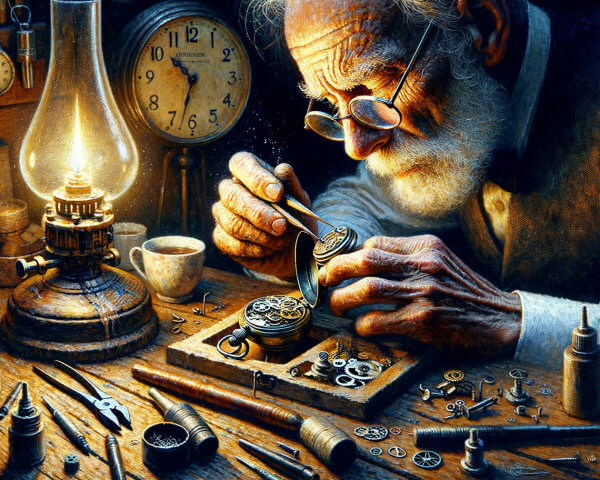
Think about the early watchmakers. Back when timepieces were first being created, master artisans crafted each one by hand. These weren’t just functional objects to measure hours and minutes—they were works of art. A single watch could take months to complete. And here’s the part that floors me: the watchmakers cared about the pieces no one would ever see. The inner gears and mechanisms—completely hidden from view—were still meticulously polished to perfection.
That’s craftsmanship.
It’s not about what’s visible. It’s about what you know to be true about your work. It’s the quiet pride of standing back, looking at what you created, and knowing you didn’t cut corners.
And yet, in a world obsessed with speed, convenience, and “good enough,” craftsmanship feels like a lost art. When was the last time you saw someone beam with pride not because of recognition, but because they knew they had given their best?
Here’s the thing: you don’t have to be a watchmaker or a woodworker to embody craftsmanship. It’s not limited to trades or the creation of physical objects. Craftsmanship is a mindset. It’s the decision to put mastery into whatever you do.
A barista who perfects a latte’s foam art isn’t just serving coffee; they’re creating beauty. A teacher who refines a lesson plan isn’t just following curriculum; they’re shaping a student’s future. A coder who meticulously tests their program isn’t just meeting a deadline; they’re preventing chaos for users who will never know their name.
That is craftsmanship.
But let’s be honest: giving your best in all that you do can be exhausting. I’ve seen people lose motivation or decide that effort is pointless because no one notices. Maybe you’ve been there—pouring yourself into a project only to feel overlooked. It’s tempting, in those moments, to drop down to the “bare minimum.”
And let’s face it—the bottom of the barrel is a very crowded place. Doing the least required, phoning it in—that’s the norm. That’s why mediocrity is so easy to find and why excellence stands out like a beacon.
Yes, going above and beyond takes more effort. But people notice. Maybe not immediately. Maybe not even aloud. But over time, those who consistently bring craftsmanship into their work rise above the noise. They create reputations that can’t be faked.
Psychologists call this “intrinsic motivation”—doing something not for rewards, but for the inherent satisfaction of the work itself. Research shows that when people are driven by purpose and mastery rather than carrots and sticks, performance improves dramatically. External rewards might give a short-term bump, but intrinsic motivation sustains craftsmanship for the long haul.
Here’s the paradox: when you stop aiming for recognition and instead focus on mastery, that’s usually when recognition shows up. People trust those who deliver consistent excellence because they know the effort wasn’t conditional.
Craftsmanship is also contagious. When one person shows up with pride in their work, it sets a new standard for everyone else. If you’ve ever been on a team where one member consistently raised the bar, you know how it pushes you higher too. Excellence has a way of making mediocrity uncomfortable.
And yes, some days your best won’t look as polished as you’d like. We’re human. Energy fluctuates. Life intervenes. But craftsmanship isn’t about perfection—it’s about intent. It’s the decision to give the best of what you have today, even if today’s “best” looks different from yesterday’s.
That’s why halfway work is such a tragedy. It doesn’t just shortchange the task; it chips away at your identity. Every time you decide to give less than you’re capable of, you reinforce the story that mediocrity is who you are. But every time you go all in—even on something small—you remind yourself that you are someone who takes pride in showing up fully.
So ask yourself: Where in your life are you cutting corners? Where have you slipped into the comfort of the bottom of the barrel, convincing yourself that no one will notice? And what would it look like to elevate your work—not for applause, but so you can say, “I did that well”?
The pride that comes with giving the best you have to offer—regardless of recognition—is the essence of craftsmanship. And in a world full of halfway efforts and shortcut culture, those who choose craftsmanship disrupt the norm.
Because in the end, this isn’t just about work. It’s about identity. It’s about who you are when no one’s watching.
So stop living at the bottom of the barrel. Raise the standard. Make craftsmanship your rebellion.
That’s disruption.
If this resonated…
Forward it to someone — Help me grow our tribe of disrupters!
🖤 Onward and upward,
Kristen
