
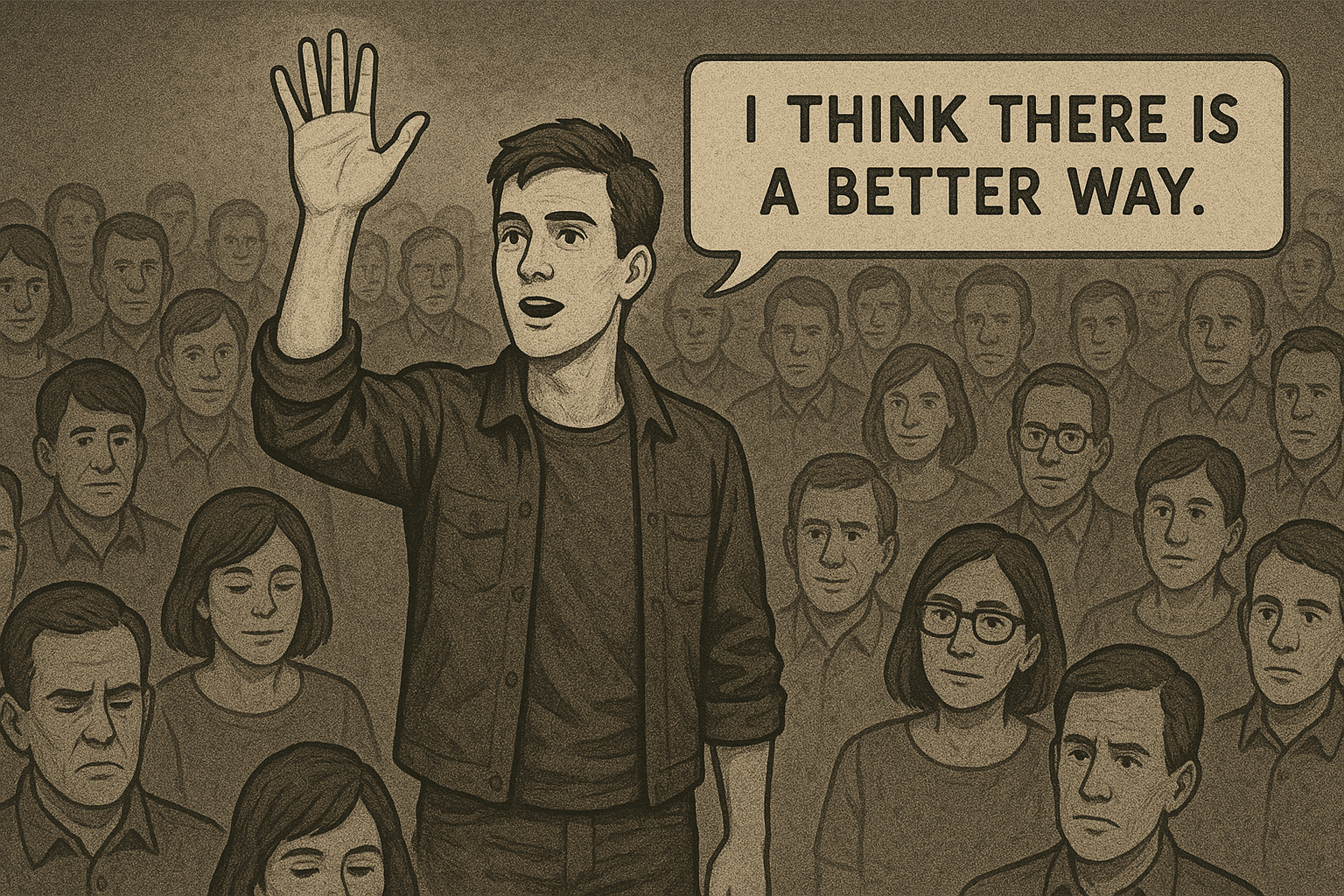
We talk a lot about workplace culture and how to change it. But we must understand what it is before we can attempt to alter it. Culture is the shared values, beliefs, behaviors, and unwritten rules that shape how people interact, make decisions, and get work done within an organization.
It is not what is printed in the mission statement; it is what actually happens in the day-to-day. Culture influences how people communicate, how leaders behave, how conflict is addressed, how success is defined, and how failure is handled. It is the invisible framework that either strengthens or weakens performance, trust, and morale.
So how do we shift the culture? That’s the million-dollar question that scholars study and consultants get hired to answer.
Here is what I’ve learned about culture: it can be disrupted the same way mindsets can—by choosing to stop making excuses, stop waiting for rescue, and start leading from wherever you are. Stop looking to the top of the organizational chart to define and set the culture. Ideally, great leaders model and communicate positive culture. But what if they don’t? Do you just throw your arms up in disgust and check out? If you do, you haven’t yet realized the power you hold to disrupt your environment.
Disruption doesn’t require permission. It requires movement from those who are brave enough to lead the charge.
But most importantly, it requires connection. Not the kind built on mutual bitterness, but the kind built on shared courage. On clarity. On the willingness to say, “We’re better than this.”
It is so much easier to stand around the proverbial water cooler complaining about our bosses and our organizations. It feels good to commiserate with others because negativity is seductive. Mutual disdain bonds us. It’s called co-rumination, and it simply lends credence to the notion that misery loves company. It gives us an excuse not to act. But it also robs us of energy, clarity, and momentum. It poisons teams. It keeps us small.
But before there’s connection, there must be care. Because people don’t speak up when they don’t give a damn. They don’t challenge the norm unless something inside them says, this matters. That’s why apathy is so dangerous—it kills disruption before it ever begins. Apathy is silence. It’s checked-out meetings and shrugged shoulders. It’s the dog that no longer barks.
But care is the spark. One person who cares out loud can activate others who care quietly. And that’s how it starts: one moment of visible care becomes a signal. You’re not the only one. That’s where connection begins. And that’s where culture starts to shift—from tolerated dysfunction to shared responsibility. From silence to movement. Because change doesn’t begin when everyone agrees. It begins when someone cares enough to act.
But even when we care, we still hesitate.
We still freeze.
We still fail to act.
Why is that?
Because caring alone isn’t always enough. There’s something else at play—something deeper and more primal. A force inside us that’s wired to scan for what’s wrong, to fixate on danger, to stay in the comfort of complaint instead of stepping into the discomfort of change.
Psychologists call it the negativity bias, our hardwired tendency to notice and dwell on negative experiences more than positive ones. Evolutionarily, it kept us safe. Spotting danger in the wild meant survival. But in today’s organizations, it means we zero in on what’s broken and overlook what’s working. Studies show that negative feedback has a stronger psychological impact than positive input, even when it’s minor. One complaint can outweigh a dozen compliments. That bias fuels our perception, distorts our decision-making, and turns even the best environments toxic if we’re not actively resisting it.
But negativity isn’t just about personal perception. It’s social, too. That’s what makes it so dangerous.
And that’s where disrupters step in.
Because there’s a better way to connect. Constructive dissent is a higher form of bonding. It’s rooted in care, not cynicism. It’s the kind of pushback that says, “I believe we can be better than this.” It’s when someone names the unspoken, challenges the assumption, or interrupts the spiral of griping—not because they want to be right, but because they care too much to stay quiet. That kind of dissent builds real trust. Not the superficial kind that comes from shared complaints, but the earned kind that comes from shared courage.
And here’s what makes it powerful: it spreads. Just like negativity, courage is contagious. When one person disrupts the rhythm of complaint with truth or clarity, others often follow. The energy shifts. The culture bends. And suddenly, people realize: We’re not stuck. We were just silent.
But let’s slow it down and look closer, because we’ve all been in every seat of that moment.
We’ve been the disrupter—the one who finally spoke up. Maybe it was clumsy. Maybe your voice shook. Maybe it didn’t land perfectly. But you did it. You said the thing. You broke the trance. And in doing so, you changed the temperature of the room. You reminded people that this conversation—this environment—could be different.
We’ve also been the observer—the one who stayed quiet. Not because we didn’t care, but because we weren’t sure what to say. Or because we were tired. Or scared. Or conditioned to believe that speaking up wasn’t our place. We nodded along. Laughed politely. Changed the subject. But later, we felt it—that gut punch that comes when you realize silence is complicity. That moment is your invitation to step forward next time.
And yes, we’ve all been the disrupted—the one saying something out loud that didn’t belong. Maybe it was a sarcastic jab. A lazy stereotype. A casual complaint that soured the room. And someone else called us out. It stings. But if we’re willing to listen—really listen—it can also save us. Being disrupted doesn’t have to mean being humiliated. It can mean being reawakened. It can mean being invited into something better.
So what do you do if you catch yourself in the middle of the complaint spiral?
You stop mid-sentence. You say, “Wait—why are we even talking about this?”
You name it: “Okay, I’m being negative. I’m frustrated, but this isn’t helping.”
You redirect: “What do we want instead?” or “How do we fix this?”
You get honest: “I’ve been stuck in blame mode and I don’t want to stay there.”
That’s how you disrupt yourself. That’s how you get out of the role of the complainer and into the role of the builder.
Can you be saved? Yes—but only if you want to be. Only if you’re willing to trade being right for being better. Only if you’re brave enough to admit that you’ve been playing small, and you’re ready to show up differently.
Culture doesn’t just shift when someone else speaks up. It shifts when you decide to stop tripping over the same old narratives and start telling a new one.
And great cultures don’t just choose between excellence or experimentation—they do both. Ambidextrous organizations know how to maintain high standards while still making room for testing new ideas. They don’t mistake discipline for rigidity. They know it’s possible to challenge and execute at the same time.
Disrupters aren’t blindly optimistic. They’re strategically defiant. They choose to see possibility even when the environment says otherwise. And they understand that one voice, strategically placed, can shift the temperature of an entire room.
So here’s your invitation: Be the person who interrupts the pattern. Be the one who asks the better question. Be the one who makes it safe to speak up and unsafe to stay silent. You don’t need permission. You don’t need consensus. You just need the courage to challenge what everyone else is tolerating.
Keep on disrupting, my fellow disrupters.
Love,
Kristen
