
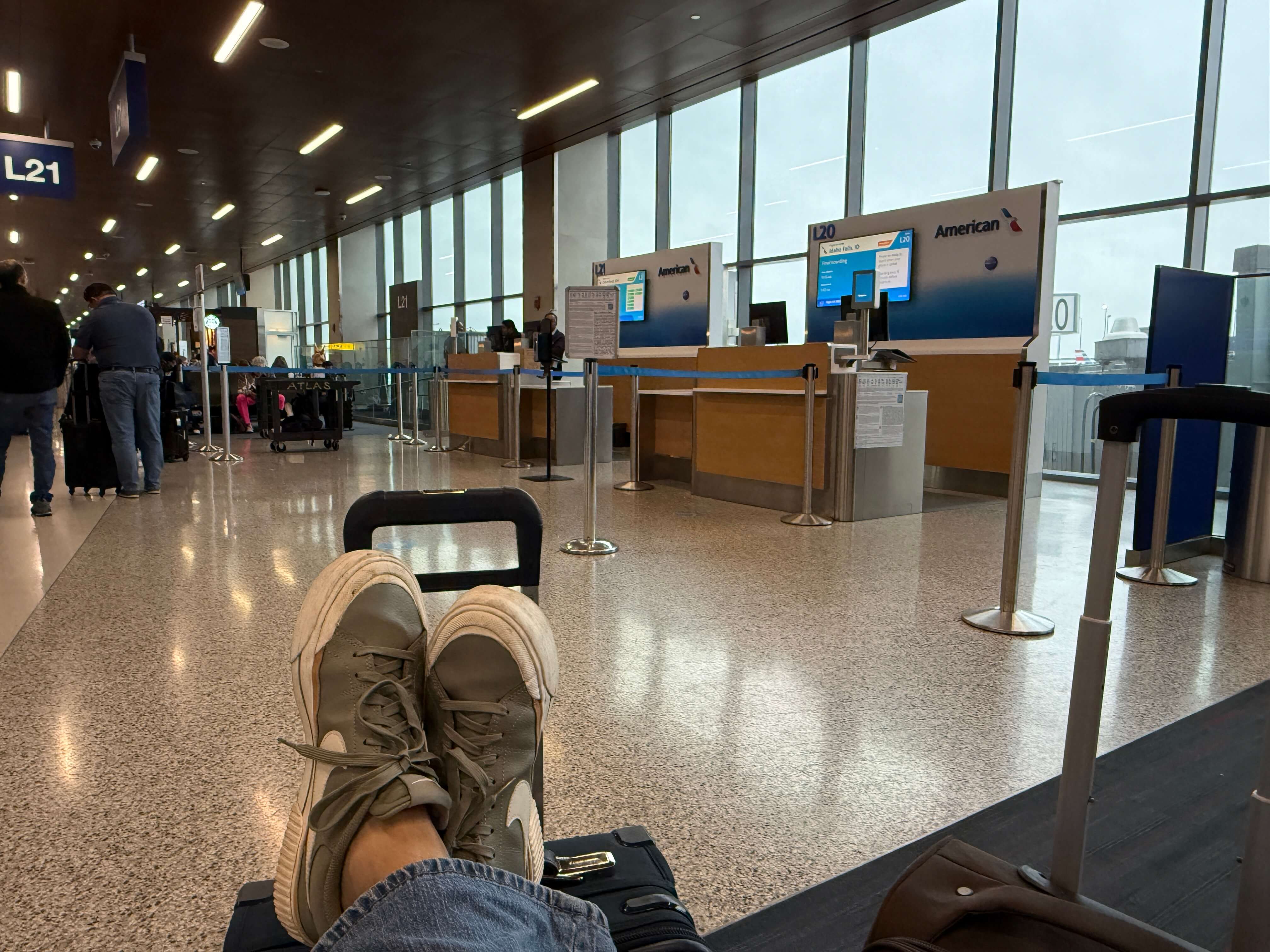
Yesterday, I hit every green light. I delivered the closing keynote at a conference in Nashville (shout out to APEX) and finished at 4:15. My flight home to Chicago wasn’t until 7:50, so I headed to the airport resigned to a long stretch of overpriced water and gate-area people watching.
Then I saw it on the board. A 5:00 flight to Chicago, delayed until 6:00. I walked up to the American Airlines counter and asked if I could get on it. “Absolutely!” Same seat as my original flight, an entire row to myself, boarding in three minutes.
I was starving, which appeared to be the one flaw in this otherwise magnificent development. Then I turned around and saw a kiosk with a protein wrap and protein balls. Apparently, even my snacks had cleared the runway. At O’Hare, the Blue Line pulled up just as I stepped onto the platform, and I got home in time to watch the Bears win. Green lights, all the way home.
I know how a story like this lands. Woman catches an earlier flight, eats a wrap, and announces she has unlocked the secrets of the universe. Calm down, Kristen. You found public transportation.
But here’s what I keep coming back to. The delay wasn’t mine. The open seat wasn’t mine. The gate agent’s generosity wasn’t mine. Walking up to the counter was. If I had stayed in my seat scrolling my phone, that flight would have left without me. I would have told you about my long travel day, and I never would have known what I missed.
That’s the part of luck we don’t like to talk about. Most of it is sitting on the board in plain sight. It only becomes luck for the person who gets up and asks.
Last week, I was being vetted for a keynote I really wanted to land. I caught myself saying, “My luck, I’m going to get it.” And I did.
Read that sentence again, because most of us never finish it that way. My luck, the flight will get canceled. My luck, they’ll pick someone else. My luck, I’ll try this and make an ass out of myself. We say it so casually we stop hearing it, as if disappointment is our assigned parking space.
Here’s what that sentence really does. It lets us off the hook. If luck is something that happens to us, then not getting the thing is the universe’s fault. We didn’t apply, didn’t call, didn’t ask, and we get to call the outcome bad luck instead of what it actually was. A choice.
I’m not immune to the no’s. I keep a file containing 89 speaking rejections. Some people collect wine. I collect evidence that I’m putting myself out there. Every one of those stung. But I don’t open that file and see a forecast for the rest of my life. I see 89 times I walked up to the counter. The yeses live in the same file as the no’s. You don’t get one without being willing to collect the other.
Sometimes the action is just showing up. Recently, a woman I play pickleball with told me I should meet her husband. We got drinks, and I learned about his career and what he’s building. I believe in it. Now we’re going to collaborate. I didn’t go to pickleball looking for a business partner. I went to play. But I was on the court, in the conversation, and I said yes to the drink. Nobody stumbles into opportunity from their couch.
Psychologists Gabriele Oettingen and Doris Mayer found something that should make every dreamer a little uncomfortable. Across a series of studies, people with positive expectations—a belief grounded in experience that something good could actually happen —put in more effort and performed better. People who indulged in positive fantasies, pleasant daydreams about the outcome, did worse. In other words, a vision board is a daydream with a glue stick. Rude, but useful. Pin up whatever you want. But at some point, you still have to act your way into it.
“My luck” comes with homework. Sometimes literally. When I applied to a PhD program, I thought, “My luck, I’m going to get accepted.” I did. Now I want to cry and pull my hair out most days. Being brave enough to suck at something new feels suspiciously like being an idiot with tuition payments. But I’m still in the chair, still reading, still stretching, because the luck of getting in means nothing if I don’t do the work of staying.
So let me ask you something. Where is your heart right now? The job, the business, the relationship, the book, the conversation you keep rehearsing and never have. Now, where is your ass? Because if those two things are in different places, you don’t have a luck problem. You have a participation problem.
That’s the reckoning. Not whether opportunities exist. They’re on the board every single day. The reckoning is whether you’ll own the distance between wanting something and walking toward it. We don’t usually put accountability and luck in the same sentence. We should.
Stay in your seat and nothing bad happens. That’s the trap. You never get told no. You also never get the row to yourself. And slowly, without ever deciding to, you start calling it bad luck when it was really a seat you never got out of.
You won’t get every seat. Some flights are full, and some gate agents will say no. Feel it, learn what you can, and go ask somebody else. Put your ass where your heart is.
Say it out loud: “My luck, something good is about to happen.” Now get up and walk to the counter.
This is your moment of reckoning. Step into it.
